Concrete pavers are popular because they combine repeatable dimensions, a broad range of colors and textures, repairable individual units, and a practical fit for patios, walkways, driveways, and pool decks. They are not maintenance-free, however. The best result comes from matching the paver to the use, installing a stable base, managing water, protecting the joints, and choosing a cleaning and sealing plan that respects the concrete surface.
What concrete pavers are
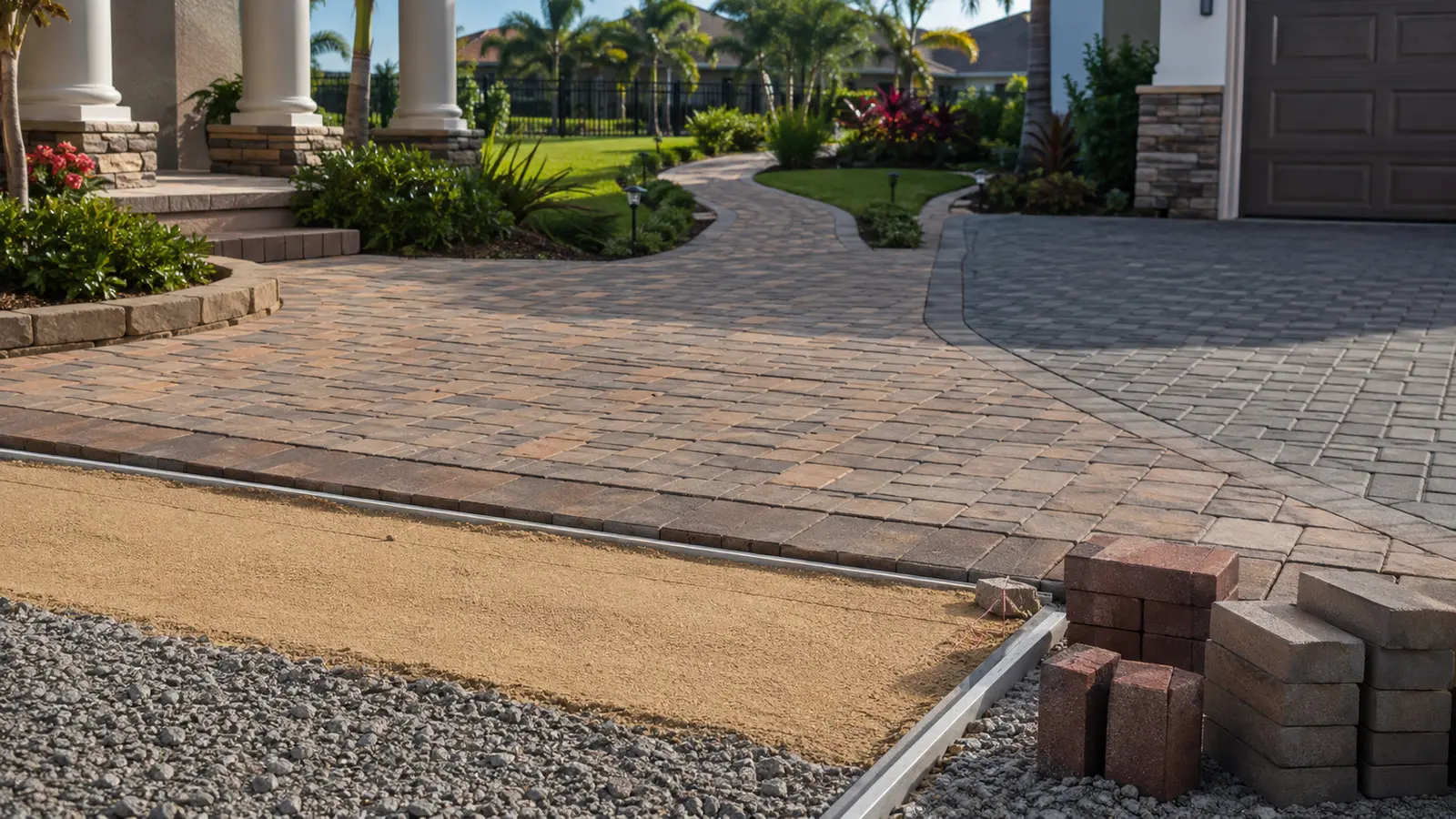
Concrete pavers are manufactured units formed from a cementitious mixture and aggregates, then cured to develop strength. Shapes, thicknesses, textures, and surface finishes vary by product. Interlocking geometry can distribute loads across a field, but the units still depend on the layers below them. The paver is the visible wearing surface; the compacted base, bedding material, joints, and edge restraints create the system that keeps it in place.
Advantages of concrete pavers
- Design flexibility: manufacturers offer many colors, textures, patterns, borders, and module sizes.
- Repairability: individual units can often be lifted and replaced without removing the entire surface.
- Predictable installation: consistent shapes make layout, cutting, and replacement easier to plan.
- Outdoor versatility: the same general material family can be used for patios, walkways, driveways, and pool areas when the correct product is selected.
- Finish options: the surface can be left natural or evaluated for a compatible penetrating or film-forming sealer.
Limitations to consider
Concrete pavers can show color variation, efflorescence, staining, edge damage, settlement, and joint erosion. Color may change as the surface weathers, and a sealer can deepen or alter that appearance. A coating may also highlight uneven application, residue, or moisture differences. These are reasons to plan testing and maintenance, not reasons to assume that every paver needs the same product or finish.
Color, texture, and absorption change the decision
Two concrete pavers can have different absorption and surface texture even when they look similar in a catalog. Dense units may accept less product, while textured or porous units can require a different application approach. Blended colors can respond unevenly to a wet-look finish, and a sealer may make a light surface appear darker. Always evaluate a representative piece or test area in the same condition as the installed surface.
Efflorescence is a mineral deposit, not simply dirt. It may appear as a white haze and can be confused with sealer whitening. The surface should be diagnosed and cleaned with a compatible method before a coating is considered. Use the efflorescence guide when deposits are present, and allow the area to dry and stabilize before making an appearance decision.
Installation determines performance
Concrete pavers should be installed over a prepared subgrade, compacted base, controlled bedding layer, and secure edge restraint. The complete paver installation guide explains the sequence. The base-material guide explains why a thicker layer is not automatically a stronger layer and why drainage should be planned from the bottom up.
Driveways and turning areas experience forces that a lightly used patio does not. Plan base depth, compaction, edge restraint, and paver thickness for the expected traffic. Keep the surface grade consistent, avoid narrow unsupported slivers at edges, and correct settlement in the foundation instead of relying on joint sand or sealer to hide movement.
Concrete pavers compared with brick
Brick and concrete pavers can both create attractive, durable hardscapes, but they differ in appearance, color behavior, texture, unit dimensions, and maintenance expectations. Brick may be chosen for its traditional character and natural variation. Concrete may offer a wider range of contemporary patterns, textures, and price points. Compare the complete system rather than selecting only by the first cost or the color shown in a sample.
The brick-versus-concrete comparison guide covers cost considerations, durability, appearance, maintenance, and sealing decisions. A material that looks ideal in a dry showroom may behave differently after repeated wetting, cleaning, traffic, and exposure.
Cleaning and stain response
Start with the stain and the condition of the paver. Sweep loose debris, identify oil, rust, organic growth, leaf tannins, and efflorescence, and test the least aggressive compatible treatment first. Avoid assuming that stronger acid, chlorine, or pressure is safer. Chemical residue left in the pores or joints can affect a later sealer and may damage adjacent materials.
Use the paver cleaning and preparation guide for the order of stain treatment, washing, rinsing, drying, and inspection. When mineral or rust deposits are present, use the rust and efflorescence guide. Do not apply a protective coating until the surface and joints have reached the required condition.
Should concrete pavers be sealed?
Sealing is a project decision based on appearance, stain exposure, cleaning expectations, substrate condition, and the product’s compatibility. A penetrating system may preserve more of the natural texture, while a film-forming wet-look or high-gloss product can deepen color and change reflectivity. No sealer corrects settlement, unstable joints, poor drainage, or contamination.
Use a small test panel to confirm color, absorption, traction, and dry appearance. The paver-sealer selection guide helps compare finish and substrate decisions. Apply only within the manufacturer’s weather, coverage, and cure requirements, maintain a wet edge, and prevent puddles or lap marks.
Plan for replacement units and long-term value
One of the practical advantages of pavers is that an individual damaged unit can often be removed and replaced. Preserve a small quantity from the original production run and record the pattern, border, and joint color. Replacement material from a later run may not match the weathered field, even when the product name is unchanged.
Consider the cost of cleaning, joint maintenance, stain response, and condition-based resealing when comparing materials. A surface that is easy to lift and repair can have a different long-term value than one that requires demolition for every localized defect. The maintenance checklist can be adapted to the property’s traffic, shade, irrigation, and exposure.
Maintenance and repair
Routine care includes sweeping, responding to stains early, keeping drainage clear, inspecting joints, and checking for rocking or settlement. Individual units may be lifted when access to the base is needed. If a sealer turns cloudy, peels, or wears unevenly, diagnose the cause before recoating; the paver-sealer problem guide is a useful next step. Use the annual maintenance checklist to schedule inspections instead of waiting for a visible failure.
Repair the base before protecting the surface
If a concrete paver rocks, settles, or holds water, lift the affected area and inspect the supporting layers. Replace unstable material, restore grade, compact the repair, and reset the units. If only the visible face is cleaned or sealed, the movement will remain and may cause new joint loss. This system-first approach also makes it easier to decide whether a sealer is appropriate after the repair has cured and the surface has been cleaned.