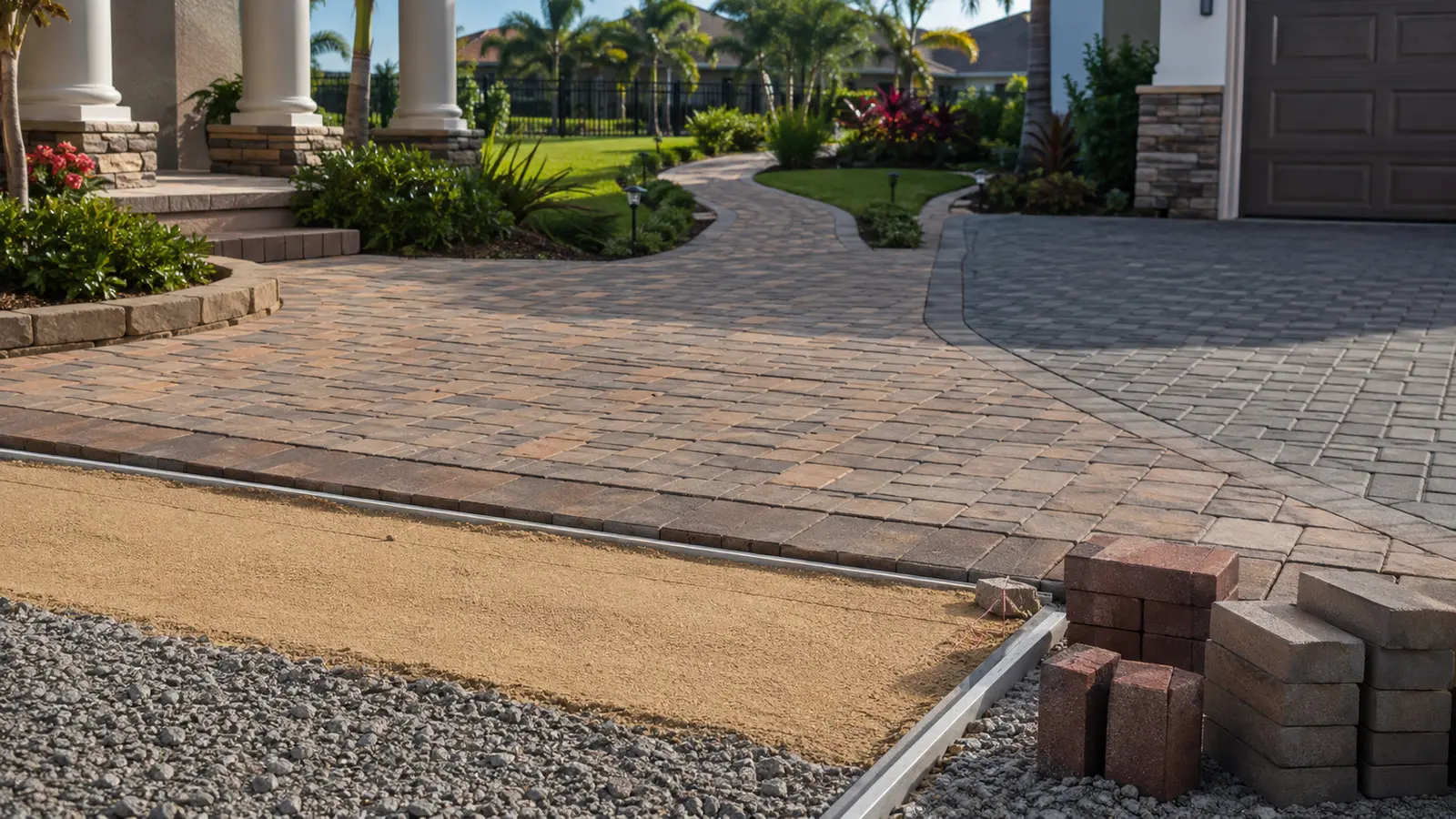
Brick and concrete pavers can both serve patios, walkways, driveways, and pool decks, but they are not identical materials. The better choice depends on the project’s traffic, appearance, budget, drainage, climate exposure, repair expectations, and maintenance plan. This comparison focuses on how the two options behave as complete hardscape systems so the decision is based on performance rather than a single sample color.
Quick comparison
| Decision | Brick pavers | Concrete pavers |
|---|---|---|
| Appearance | Traditional character, natural variation, and a warm masonry look. | Broad color, texture, shape, and pattern choices. |
| Repair | Individual units can often be removed and replaced. | Individual units can often be removed and replaced. |
| Selection | Evaluate unit strength, absorption, texture, and intended use. | Evaluate thickness, surface finish, color behavior, and intended use. |
| Maintenance | Keep joints, drainage, and surface deposits under control. | Keep joints, stains, efflorescence, and sealer condition under control. |
| Sealing | Test absorption and desired appearance before choosing a system. | Test color change, absorption, finish, and compatibility before coating. |
Appearance and design
Brick pavers are often selected for their traditional proportions, warm color range, and natural variation. They can complement older architecture, garden walls, and masonry details. Concrete pavers provide a wider range of shapes, textures, modular sizes, and color blends, making it easier to create large contemporary patterns or coordinate with a broad hardscape palette. The right choice is the one that supports the architecture and the practical use of the space.
Look at samples in the intended light and after wetting. A sealer can deepen or change the appearance of either material. A wet-look or high-gloss finish is not a neutral clear coat; it changes reflectivity and may emphasize color differences. Use the paver-sealer selection guide after the material choice, not before it.
Cost and value
Material price is only one part of the installed cost. Excavation, base aggregate, drainage, edge restraint, cuts, patterns, access, labor, joint material, cleaning, and sealing can affect the total. Brick may carry a different material and labor cost than concrete pavers, but a simple pattern with a well-prepared base can outperform a more expensive material installed over unstable soil. Request an estimate that identifies the whole system rather than comparing paver-unit prices alone.
Durability depends on the system below
Neither brick nor concrete pavers are protected from settlement by their material alone. The subgrade must be prepared, the aggregate base must be compacted in suitable lifts, the bedding layer must remain controlled, and the edges must resist lateral movement. The paver base-material guide and installation guide apply to both material choices.
Driveways need special attention to turning loads and edge restraint. Walkways and patios still need drainage and a stable foundation even when vehicle traffic is absent. Pool decks require careful transitions and a surface that remains manageable when wet. Select the paver’s intended application and follow the manufacturer’s requirements rather than assuming any unit is suitable for every location.
Cleaning, joints, and everyday care
Both materials benefit from routine sweeping, quick treatment of spills, and clear drainage. Brick and concrete can both show organic growth, leaf tannins, oil, dirt, and mineral deposits. Start with the stain and choose a compatible cleaner. The paver cleaning guide describes a safe order of operations, while the rust and efflorescence resource addresses deposits that require more specific diagnosis.
Inspect joints after heavy rain, cleaning, and seasonal changes. Joint erosion can permit movement and weeds regardless of the paver material. Review the joint-sand guide before adding material, compacting, watering, or applying a sealer.
Sealing brick and concrete pavers
Sealing can help with stain response and appearance, but it is optional in some projects and inappropriate when the surface is contaminated, damp, unstable, or covered with an incompatible old film. Test a small area first. Check for color change, absorption, traction, dry time, and uniformity. A penetrating sealer and a film-forming wet-look sealer create different results, so describe the desired appearance precisely.
Questions to answer before ordering
- Will the surface carry vehicles, furniture, foot traffic, or repeated wet-area traffic?
- Does the site have a stable, drainable base, or will excavation and rebuilding be required?
- Which appearance fits the architecture when the pavers are both dry and wet?
- How will individual units, joints, stains, and edges be maintained?
- Will the chosen sealer change color, reflectivity, or traction?
- Are the paver, joint material, cleaner, and sealer compatible as one system?
Ask for product data and installation requirements instead of relying on a photograph. Obtain enough material from the same production run to limit visible variation, keep replacement units, and confirm the layout before installation. A small mock-up can expose color, texture, joint, and sealer issues while changes are still inexpensive.
Compare the complete installed system
A meaningful comparison includes excavation, base aggregate, bedding, edge restraint, cuts, joint material, cleaning, and protection. Two paver choices can have similar unit prices but different installation labor or maintenance requirements. Ask how the proposed system handles a soft spot, a drain, a vehicle edge, a pool transition, and a future replacement. These answers reveal more than a color board.
Also compare the surface after installation, not only before it. Will the joints remain stable after washing? Will the material show mineral deposits? Will the chosen finish make the color too dark or reflective? Will the cleaning method protect adjacent walls, plants, glass, and pool water? The cleaning guide and joint-sand guide help turn those questions into a practical maintenance plan.
Use the sealer guide to evaluate surface, finish, and application choices. Keep the surface clean and dry, follow coverage instructions, maintain a wet edge, and avoid puddling. Sealer should protect a sound installation; it should not be used to hide settlement, joint failure, or poor drainage.
Which material is better for your project?
Choose brick when its masonry character, proportions, and expected maintenance fit the design. Choose concrete pavers when the broader range of patterns, textures, and replacement units better serves the project. In both cases, prioritize the base, drainage, joint design, and maintenance plan. A well-installed, appropriately maintained surface is more valuable than a material selected only because it looked best in a single sample.