Returning patio furniture is more than the final cleanup step after paver sealing. Chair feet, umbrella stands, wheels, and heavy planters contact the surface differently from a person walking across it. Planning these contact points helps protect the finish while the area returns to normal use.
Ask about the actual load
Before the furniture moves, inventory what will come back. A lightweight chair and a loaded rolling cabinet are not equivalent. Note narrow metal feet, damaged plastic caps, and heavy bases. Photograph the furniture layout so the owner can restore it without dragging pieces across the patio.
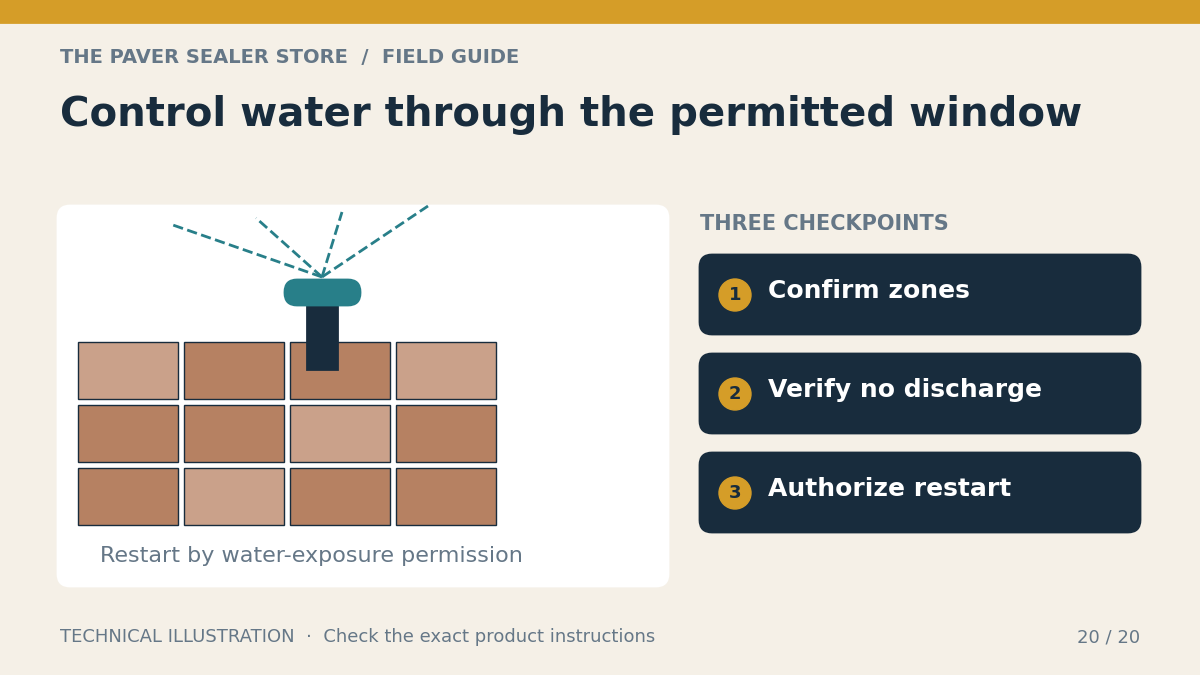
Obtain the sealer’s current cure and return-to-service guidance. A surface that looks dry may not be ready for concentrated loads or prolonged contact. Ask the supplier about the specific furniture and conditions when the instructions do not address them. Do not substitute a universal overnight waiting rule.
Prepare the feet away from the paving
Clean dirt and grit from contact surfaces before setting anything down. Replace missing or sharp foot caps using the furniture manufacturer’s recommended parts. Inspect metal bases for rust and check that water cannot collect unseen beneath a solid base.
Protective pads are not automatically compatible with every coating. Rubber, adhesives, and other materials can behave differently with heat and long contact. Confirm suitability and use a small monitored trial where practical. A pad should distribute contact without trapping debris or creating a slip hazard.
Lift rather than drag
Arrange enough help for large items and establish a clear route. Keep furniture off the work area until the approved return time. Avoid rolling equipment through grit and then across the finished paving. Where an item must be moved with a cart, confirm that the load and wheels are appropriate for the cured surface.
Do not test readiness by placing a heavy base and twisting it. Follow the manufacturer’s cure criteria and inspect any trial contact without deliberately damaging the finish.
Check the patio after it is in use
Look beneath frequently moved chairs and around fixed bases during routine maintenance. Remove accumulated grit, adjust damaged caps, and investigate new rings or scuffs before adding more sealer. Localized marks may come from contact, moisture, rust, or contamination; they do not all require the same repair.
Review our Sealing Problems guide if marks appear. For help interpreting return-to-service directions for your selected product, call the Paver Sealer Store at 813-308-9202.