A well-prepared patio can be contaminated again by the next contractor who arrives. Painting, masonry cutting, landscaping, pool service, and screen repairs can all affect a paver sealing schedule. Coordinating the sequence is often as important as choosing the application day.
List work that can change the surface
Ask the owner what work is still planned, including small finishing tasks. Identify operations that create dust, splash water, move heavy equipment, or require repeated access across the paving. Repairs to loose pavers and drainage problems should be resolved before the coating plan is finalized.
Do not assume that a completed installation is ready for immediate sealing. Confirm the paving manufacturer’s requirements and the cure of repair materials, grout, concrete, or joint products. Each material can impose its own condition on the schedule.
Set a clean-surface handoff
Agree on when dusty or wet work will end. Inspect the paving after those operations, then plan the final cleaning and preparation. Covering pavers during construction helps, but it does not prove that the surface beneath the cover is clean and suitable for coating.
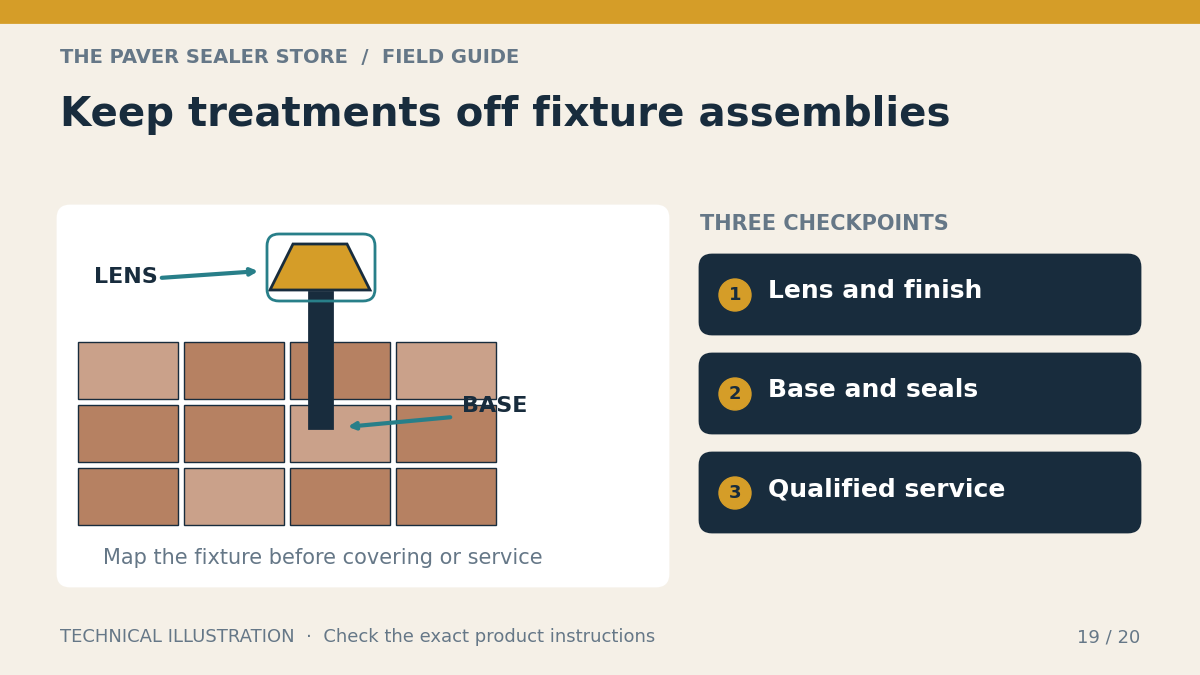
Check edges near freshly painted walls, repaired coping, and new metal fixtures. Confirm cleaner and sealer compatibility with adjacent finishes. The goal is to avoid solving one trade’s cleanup problem by damaging another trade’s work.
Reserve the curing window
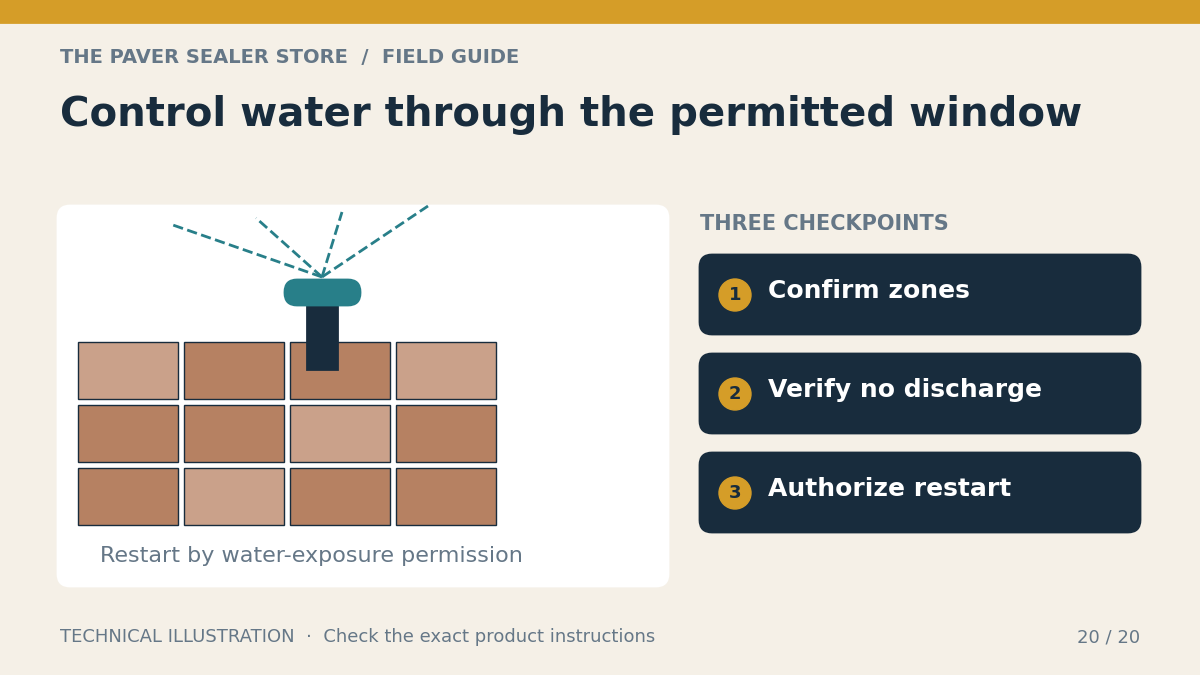
Give every contractor the selected sealer’s access restrictions in writing. Include pedestrian traffic, vehicles, equipment, furniture, and water exposure where addressed by the product instructions. Establish a route that keeps workers from crossing the coated area. If no route exists, move the sealing date rather than relying on everyone to walk carefully.
Assign one person to communicate schedule changes. Weather delays and incomplete repairs can invalidate an earlier plan. Recheck surface readiness after any intervening work, even if the owner says it was minor.
Document what was postponed
At closeout, tell the owner when remaining tasks may resume under the product directions. Provide the coating name and the restrictions relevant to those tasks. Avoid promising that protective paper, a mat, or a plywood sheet makes uncured coating safe for heavy work; covers may also alter moisture and contact conditions.
Use our Paver Sealer Guide when planning preparation and application. Contact the Paver Sealer Store at 813-308-9202 if another trade’s schedule conflicts with the selected system.