By Scott Colletti, Paver Sealer Store
A spray application affects more than the pavers beneath the nozzle. Nearby windows, painted trim, screens, vehicles and pool water need a protection plan before the sealer is mixed or opened. The right plan defines the work boundary and when spraying must stop.
Walk the perimeter before setting up
Identify surfaces that could receive drifting spray or runoff. Include property beyond the immediate patio: a neighboring parked vehicle or open window may be closer to the spray path than it first appears. Arrange access and move portable items before starting.
Follow the product SDS for exposure controls and personal protection. Masking property does not replace ventilation or the prescribed protection for people.
Protect compatible surfaces with suitable materials
Select covers, tape and shields appropriate for the adjacent finishes. Test tape where necessary and avoid attaching it to fragile paint or weathered surfaces without checking. Secure covers so moving air cannot lift them into wet coating.
Protect drains and pool areas using an appropriate containment plan while preserving safe drainage. Do not rinse sealer or cleaning chemicals into a pool, storm drain or landscaping as a cleanup method.
Evaluate conditions at the work area
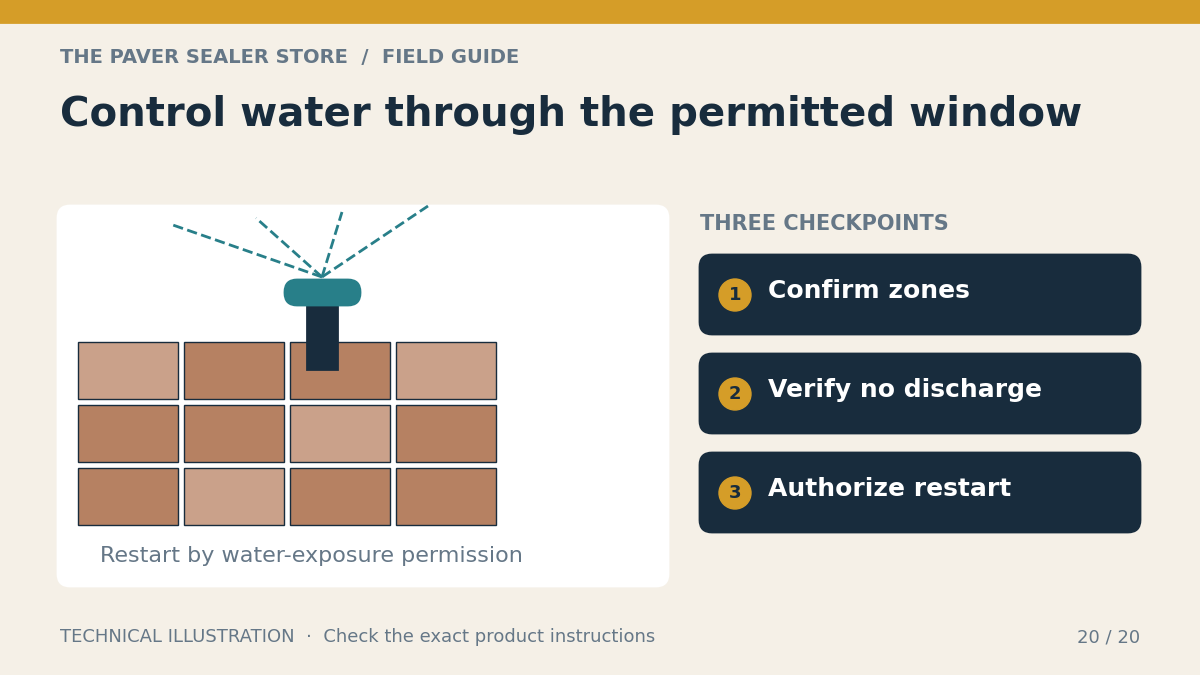
Use the product’s application limits and actual spray behavior rather than a universal wind-speed rule. Gusts, building corners and airflow through screen enclosures can change the path of spray even when the forecast looks calm.
A shield can help contain a local edge but does not make uncontrolled drift acceptable. If spray cannot be kept within the protected work area, pause. Use an alternative application method only if the product directions permit it.
Control equipment without changing the product
Use a compatible sprayer and the specified tip and operating conditions. Do not dilute the material to make an unsuitable sprayer work. Excess pressure or an inappropriate nozzle may worsen atomization and drift.
Review our spraying versus rolling guide before selecting the method. Check output on a representative section and maintain the approved application rate.
Prepare for an accidental deposit
Have the current cleanup instructions available before application begins. If material reaches another surface, stop the source and identify both the sealer and affected finish before attempting removal. A solvent that removes the coating may also damage paint, plastic or another protective finish.
Document the location and seek manufacturer guidance when compatibility is unclear. Do not improvise a chemical mixture or scrub aggressively to hide the deposit.
Inspect before removing protection
Check the perimeter, access paths and equipment staging area. Remove masking at the stage allowed by the application and masking instructions, taking care not to drag wet material across adjacent surfaces. Use the Sealer Finder for system selection and call 813-308-9202 with product-specific application questions.