Part of the How to Apply Paver Sealer guide.
If a sprayer suddenly uses more sealer or produces an uneven fan, the surface may not be the cause. A worn or damaged nozzle can change how material is deposited even when the operator keeps the same pace. Diagnose the equipment before compensating with faster passes, higher pressure or an extra coat.
Distinguish wear from an obstruction
Graco explains that wear in an airless tip can enlarge the opening while narrowing the spray fan. That relationship is relevant to the type of tip described; do not assume every pump-sprayer nozzle wears identically. A partial obstruction can also create an asymmetric pattern or intermittent flow. These are different service conditions and should be investigated separately.
A useful starting point is the equipment’s documented baseline. Keep the nozzle identification and an acceptable pattern record from commissioning or replacement. Comparing today’s result with a known configuration is more informative than deciding whether the fan looks vaguely similar to another crew’s setup.
Use a controlled comparison
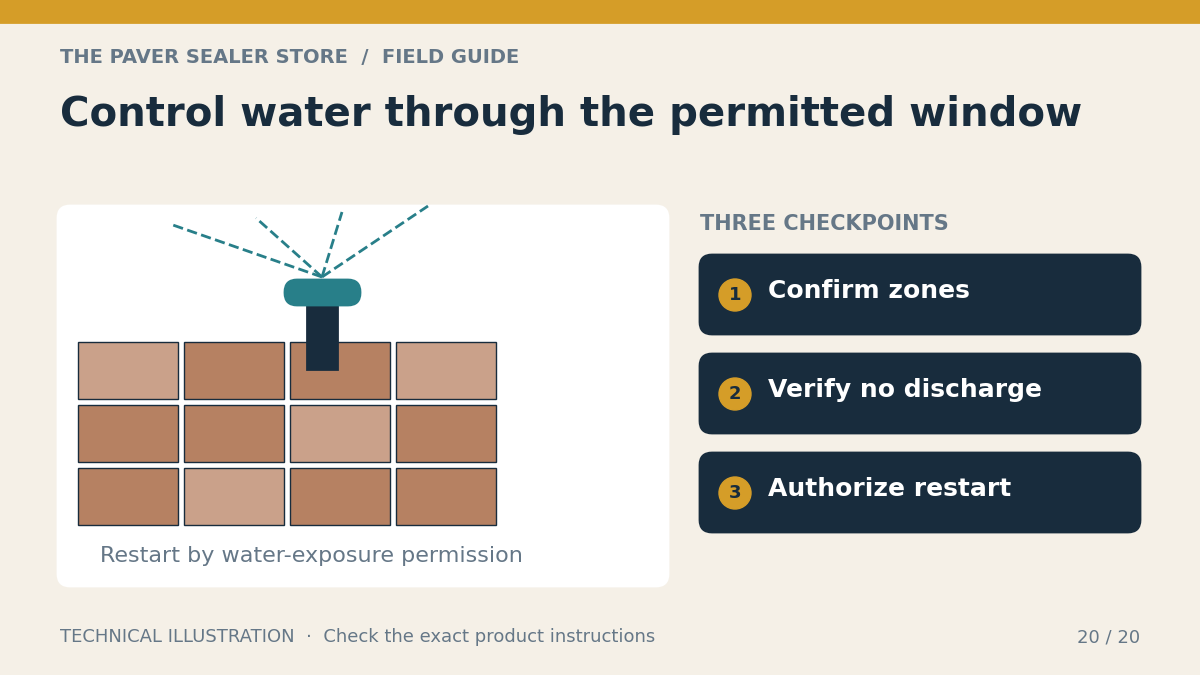
Check that the sealer permits the sprayer, nozzle and pressure arrangement. Select a safe test location with controlled overspray and follow the equipment’s test procedure. Keep the nozzle distance, orientation and operating settings consistent so a change in technique does not masquerade as wear.
| Observation | Possible explanation | Next check |
|---|---|---|
| Fan becomes narrower over time | Wear or another equipment change | Compare with the manufacturer’s service criteria |
| One side is irregular | Obstruction, damage or orientation | Stop and inspect under the service procedure |
| Flow pulses | Supply, filter or pump issue | Check the complete approved flow path |
| Output rises but settings seem unchanged | Nozzle wear or inaccurate material accounting | Repeat a measured output comparison |
Service the nozzle without creating another problem
Depressurize and isolate the equipment exactly as the manual requires before removing components. Do not check a leak or blocked tip with a hand in the spray path. Use the manufacturer’s cleaning tools and replacement components; an improvised wire or drilled opening can alter a nozzle’s geometry.
Keep suspected worn parts separate from serviceable spares. Label the replacement so a crew member does not reinstall the old nozzle later. Check the associated guard, gasket and seal arrangement during reassembly, and confirm that all materials remain compatible with the coating.
Do not solve wear by chasing pressure
Pressure changes can hide part of a pattern problem while changing output, overspray or equipment wear. Use the operating guidance for the actual sprayer and sealer. If a sound pattern cannot be obtained within the permitted setup, stop and resolve the equipment condition rather than pushing beyond the instructions.
Replacement also requires a fresh application check. A new tip may deliver a different quantity than the worn component it replaces. Recheck a measured representative section before returning to full production. Keep application pace, coverage and the product’s coat system connected.
Review work already completed
If the nozzle condition changed during a job, map the sections coated before and after the change. Record material use and photographs while the evidence is available. Inspect those sections at the product’s required evaluation point. A nozzle problem does not automatically mean the entire job needs stripping, and adding coating without diagnosis can deepen a local build problem.
A useful record identifies the component, symptoms, service action, test result and affected area. That gives technical support enough context to assess the next step without guessing whether the problem began in the product, surface or equipment.
Frequently asked questions
Should I increase pressure when the spray fan gets worse?
First diagnose the cause and follow the equipment and sealer instructions. Increased pressure is not a reliable repair for wear or blockage.
Do I need to recalibrate after replacing a nozzle?
Yes. Recheck the pattern and measured application rate before continuing across the job.
Related guides
- Paver Sealer Sprayer Filters: Match the Filter to the Product and Equipment
- Can a Wet-Film Gauge Measure Sealer on Textured Pavers?
- Measure sprayer output on a test section
Technical reference
Graco: identifying worn spray tips. Use the current instructions for the exact surface, product and equipment. The job workflows above are editorial guidance, not a substitute for product-specific specifications.
Get help with the exact surface and product
Share the surface type, existing sealer, product information and clear photographs with Paver Sealer Store. Call 813-308-9202 for help matching your preparation or sealing plan to the actual installation.