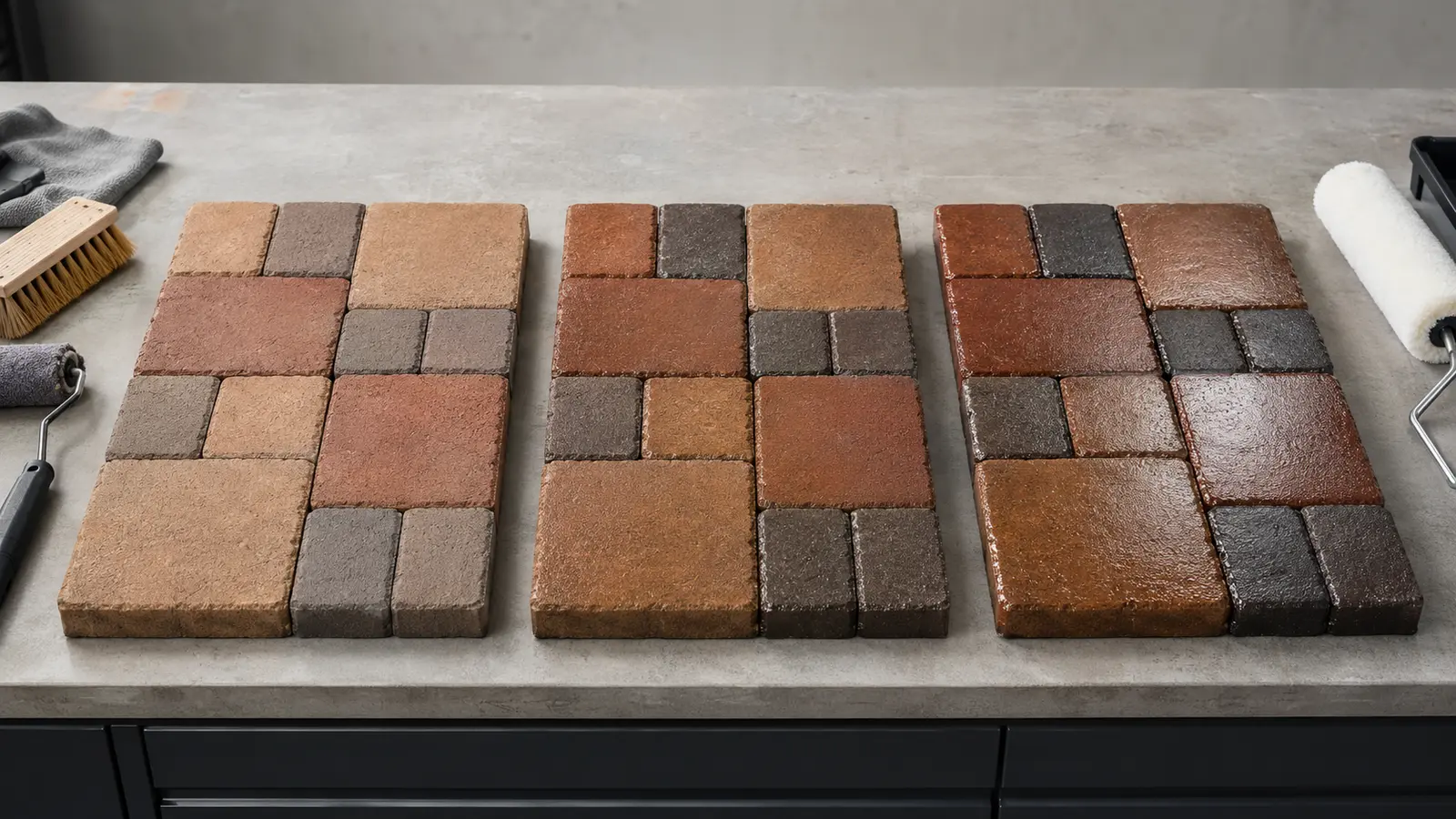
Sealing pavers is essential for protecting against stains, fading, moisture absorption, and surface wear. Whether you want a rich wet look, a mirror-like high gloss, or an invisible natural finish, the sealing process is nearly identical—what changes is the type of sealer you choose.
This complete guide explains how to seal concrete, brick, and natural stone pavers correctly, avoid common mistakes, and choose the right TPSS sealer for your desired finish.
To seal pavers: clean the surface, let it dry for 24–48 hours, apply one or two thin coats of paver sealer with a sprayer or roller, and let it cure fully.
Benefits of Sealing Pavers
Sealing provides:
- Protection against oil, grease, rust & stains
- UV fade resistance
- Mold & mildew prevention
- Enhanced color (wet look or gloss)
- Joint sand hardening
- Reduced weed growth
- Easier long-term maintenance
🡆 Compare top sealers:
Best Paver Sealers of 2025
⭐ Wet Look vs High Gloss vs Natural Finish — Which Is Right for You?
| Finish | Best Product Type | Appearance | Where It Works Best |
|---|---|---|---|
| Wet Look | Urethane Sealer | Deepened color, mild sheen | Patios, driveways |
| High Gloss | Urethane High Gloss | Shiny, dramatic effect | Decorative patios |
| Natural Look | Penetrating Sealer | No color change | Travertine, marble |
⭐ TPSS Recommended Sealers
• TPSS High Gloss Urethane Sealer
Wet look + high gloss + maximum durability.
• TPSS Wet Look Urethane Sealer (Classic Gloss)
Enhanced color without excessive shine.
• Natural Look Penetrating Sealer
Invisible protection, perfect for natural stone.
🧼 Step 1: Clean the Pavers Thoroughly
Sealer bonds only to clean, dry, residue-free surfaces.
Remove:
- Dirt & grime
- Oil stains
- Mold & algae
- Leaf stains
- Efflorescence
Use TPSS Paver Cleaner & Degreaser (best all-purpose cleaner).
🡆 Cleaning guide:
How to Clean Pavers Without a Pressure Washer
🡆 Stain removal specifics:
How to Remove Oil, Rust & Leaf Stains
🌬 Step 2: Let Pavers Dry Completely (Most Important Step)
Moisture is the #1 reason sealer turns white or hazy.
Minimum Dry Time
- 24 hours sun exposure (recommended: 48 hours)
- Longer if shaded or humid
How to test dryness:
Tape plastic down for 1 hour → no condensation = safe to seal.
🎨 Step 3: Choose Your Desired Sealer Finish
✔ Wet Look (Most Popular)
Use TPSS Urethane Wet Look Sealer.
✔ High Gloss
Use TPSS Urethane High Gloss Sealer.
✔ Natural Look
Use penetrating sealer for travertine, marble, limestone.
🡆 Finish comparison:
Wet Look Sealer Guide
🧴 Step 4: Apply the Sealer (Sprayer or Roller)
Sprayer Application (Best Method)
- Use a pump sprayer
- Spray thin, even coat
- Back-roll to level puddles
Roller Application
- Use ⅜” or ½” nap roller
- Apply thin coats
- Avoid pushing sealer into joints too aggressively
Coverage
- Urethane sealers: 175–225 sq ft/gal
- Penetrating sealers: 150–200 sq ft/gal
🎯 Step 5: Apply a Second Coat (If Needed)
Second Coat Rules
- Only apply when the first coat is tack-free
- Thin coats only
- Do NOT overapply
General Guidelines:
- Urethane: 1–2 thin coats
- Acrylic: 2–3 thin coats
- Penetrating: 1 flood coat
🕑 Step 6: Let the Sealer Cure
Cure Times
- Light foot traffic: 24 hours
- Vehicle traffic: 48–72 hours
- Full cure: 5–7 days
Keep pavers dry—protect from sprinklers, rain, and dew.
❌ Common Sealing Mistakes to Avoid
1. Sealing wet pavers
Causes whitening, haziness, bubbling.
2. Applying too much sealer
Thick coats = slippery, sticky, or white surface.
3. Using the wrong sealer for the material
Travertine requires breathable options.
4. Not cleaning pavers thoroughly
Dirt becomes permanently sealed underneath.
5. Not letting sealer dry fully between coats
Leads to tacky, uneven finish.
🔧 Troubleshooting Common Sealing Issues
Paver Sealer Turned White
Cause: Moisture trapped under sealer
Fix: Strip & reseal using correct dry times
🡆 Detailed fix:
Fixing Cloudy or White Pavers After Sealing
Sealer Looks Streaky or Blotchy
Cause: Uneven application
Fix: Apply a thin correction coat
Pavers Are Sticky After Sealing
Cause: Overapplication
Fix: Use solvent/cleaner lightly to break down gloss
🧰 How Often Should You Seal Pavers?
| Sealer Type | Lifespan |
|---|---|
| Urethane | 2–4 years |
| Acrylic | 1–2 years |
| Penetrating | 5+ years |
🔗 Read All About:
- Best sealer options for 2025 →
- Wet look vs natural finish guide →
- How to clean pavers properly before sealing →
- Removing stains before sealing →
- Fixing white/hazy sealer issues →
- Annual paver maintenance checklist →
❓ FAQs (Human-Friendly + Schema Ready)
Do pavers need to be sealed?
Yes. Sealing prevents stains, fading, moisture absorption, and sand erosion.
How long should pavers dry before sealing?
At least 24–48 hours, longer if the area is shaded or humid.
What is the best sealer for concrete pavers?
The best option is TPSS High Gloss Urethane for wet look and maximum protection.
Can I apply sealer with a roller?
Yes, but sprayers provide a more even application.
How often should sealed pavers be resealed?
Every 2–4 years depending on traffic and climate.