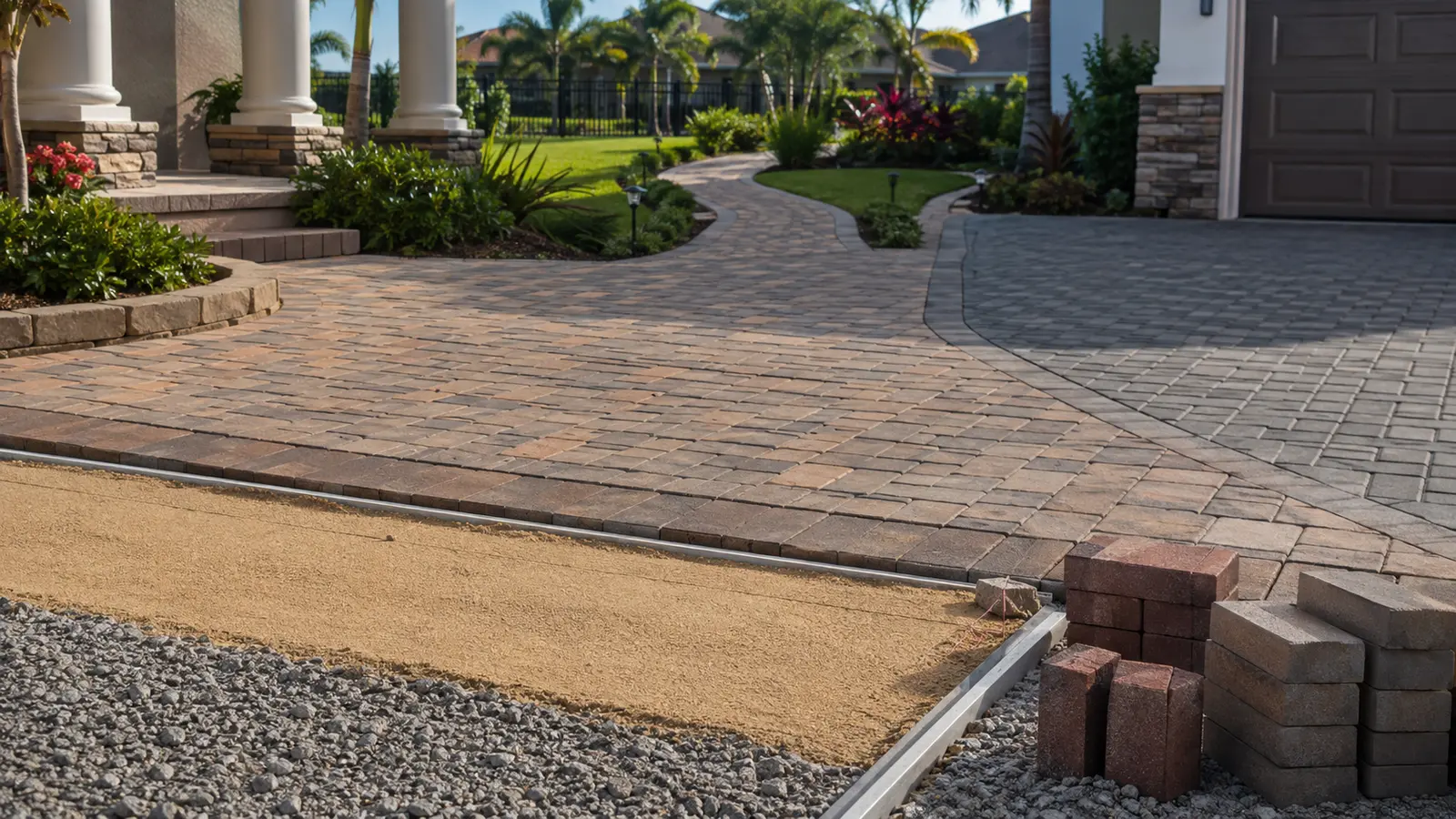
Not everyone has access to a pressure washer—or wants to risk damaging their pavers with high pressure. Fortunately, you can thoroughly clean concrete, brick, and stone pavers without a pressure washer using simple tools and effective cleaning solutions.
This guide shows you the safest and most effective methods to remove:
- Dirt & grime
- Mold & mildew
- Light oil stains
- Leaf stains
- Organic buildup
- Efflorescence
To clean pavers without a pressure washer: sweep debris, apply a paver-safe cleaner, scrub with a stiff brush, allow dwell time, and rinse thoroughly with a garden hose.
Supplies You’ll Need
Tools
- Broom
- Bucket
- Stiff bristle brush
- Garden hose
- Rubber gloves
Cleaners (Recommended):
- TPSS Paver Cleaner & Degreaser (for dirt, grease, and grime)
- Oxygenated cleaner (for organic stains)
- Efflorescence remover (if needed)
Step 1: Sweep and Remove Loose Debris
Using a stiff broom, remove:
- Dirt
- Sand
- Leaves
- Mulch
- Branches
Loose debris traps moisture and encourages mold growth, so thorough sweeping is important.
Step 2: Mix Your Cleaning Solution
Choose the correct cleaner based on what you’re removing:
For general dirt & grime:
Use TPSS Paver Cleaner & Degreaser diluted according to label directions.
For leaf/tannin stains:
Use an oxygenated cleaner.
For mold, algae & mildew:
Use a paver-safe algae and mildew remover.
For efflorescence:
Use an efflorescence cleaner (buffered recommended).
🡆 See stain-specific methods:
How to Remove Oil, Rust & Leaf Stains
Step 3: Apply Cleaner and Let It Dwell
Pour or spray your cleaning solution onto the pavers.
Dwell Times
- General cleaning: 5–10 minutes
- Organic stains: 10–20 minutes
- Mold/mildew: 15–30 minutes
Do not let the cleaner dry out—mist lightly with water if needed.
Step 4: Scrub the Pavers
Use a stiff-bristle brush to scrub in circular motions.
What scrubbing accomplishes:
- Lifts dirt from pores
- Breaks down stains
- Helps activate cleaner
- Prevents streaking
Scrubbing is key when you’re cleaning without a pressure washer.
Step 5: Rinse Thoroughly with a Garden Hose
Use the highest-flow setting available.
A strong stream will:
- Remove loosened dirt
- Flush out pores
- Remove leftover cleaner
- Prevent residue marks
Step 6: Allow Pavers to Dry Completely
Dry time: 4–12 hours depending on sunlight and weather.
This is especially important if you plan to seal pavers afterward.
🡆 How to seal:
How to Seal Pavers Step-by-Step
How to Clean Mold & Algae Without a Pressure Washer
Mold thrives in:
- Shaded areas
- Damp climates
- Pool decks
- Areas with poor drainage
Method
- Apply mold/mildew remover
- Let dwell 15–20 minutes
- Scrub thoroughly
- Rinse
Improving drainage and increasing sunlight exposure helps prevent regrowth.
How to Clean Oil Stains Without a Pressure Washer
Small or fresh oil stains can be removed with:
Method
- Apply TPSS Cleaner & Degreaser
- Let sit 5–10 minutes
- Scrub aggressively
- Rinse well
- Repeat if necessary
🡆 Full stain guide:
How to Remove Oil & Rust from Pavers
How to Clean Leaf & Tannin Stains Without a Pressure Washer
Leaf stains show up as brown, black, or yellow patches.
Method
- Apply oxygenated cleaner
- Let foam activate
- Scrub with medium brush
- Rinse
Repeat for deeper organic stains.
How to Prevent Paver Stains and Organic Growth
The best long-term solution is sealing your pavers.
Benefits of sealing after cleaning:
- Prevents oil and rust penetration
- Reduces algae & mold
- Stops leaf tannin absorption
- Makes cleaning easier
- Enhances color and durability
Best Choice:
TPSS High Gloss or Wet Look Paver Sealer
🡆 Compare sealers:
Best Paver Sealers of 2025
When Cleaning Without a Pressure Washer Is NOT Enough
Consider using professional cleaning methods when:
- Stains are deep or multiple layers thick
- Pavers have heavy algae/mildew
- Joint sand has eroded
- Sealer is hazy or white
🡆 Fix sealer issues:
Fixing Cloudy or White Pavers After Sealing
Read more troubleshooting guides:
- How to remove tough paver stains →
- Best paver cleaning products →
- Step-by-step paver sealing →
- High gloss & wet look sealers →
- Fixing sealer whitening →
- Annual paver maintenance guide →
FAQs About Cleaning Pavers Without a Pressure Washer
What is the easiest way to clean pavers without a pressure washer?
Use a paver-safe cleaner, scrub with a stiff brush, let dwell, and rinse thoroughly.
Can I use vinegar to clean pavers?
Not recommended on natural stone. It may lighten minor stains but can cause damage.
Is scrubbing enough to clean mold?
Yes—with the correct cleaner. Mold removers break down organic growth effectively.
Will cleaning remove sealer from pavers?
Light cleaning won’t, but strong chemicals or aggressive scrubbing may reduce gloss.
Should I reseal pavers after cleaning?
If the surface looks dull, faded, or porous, sealing is recommended.