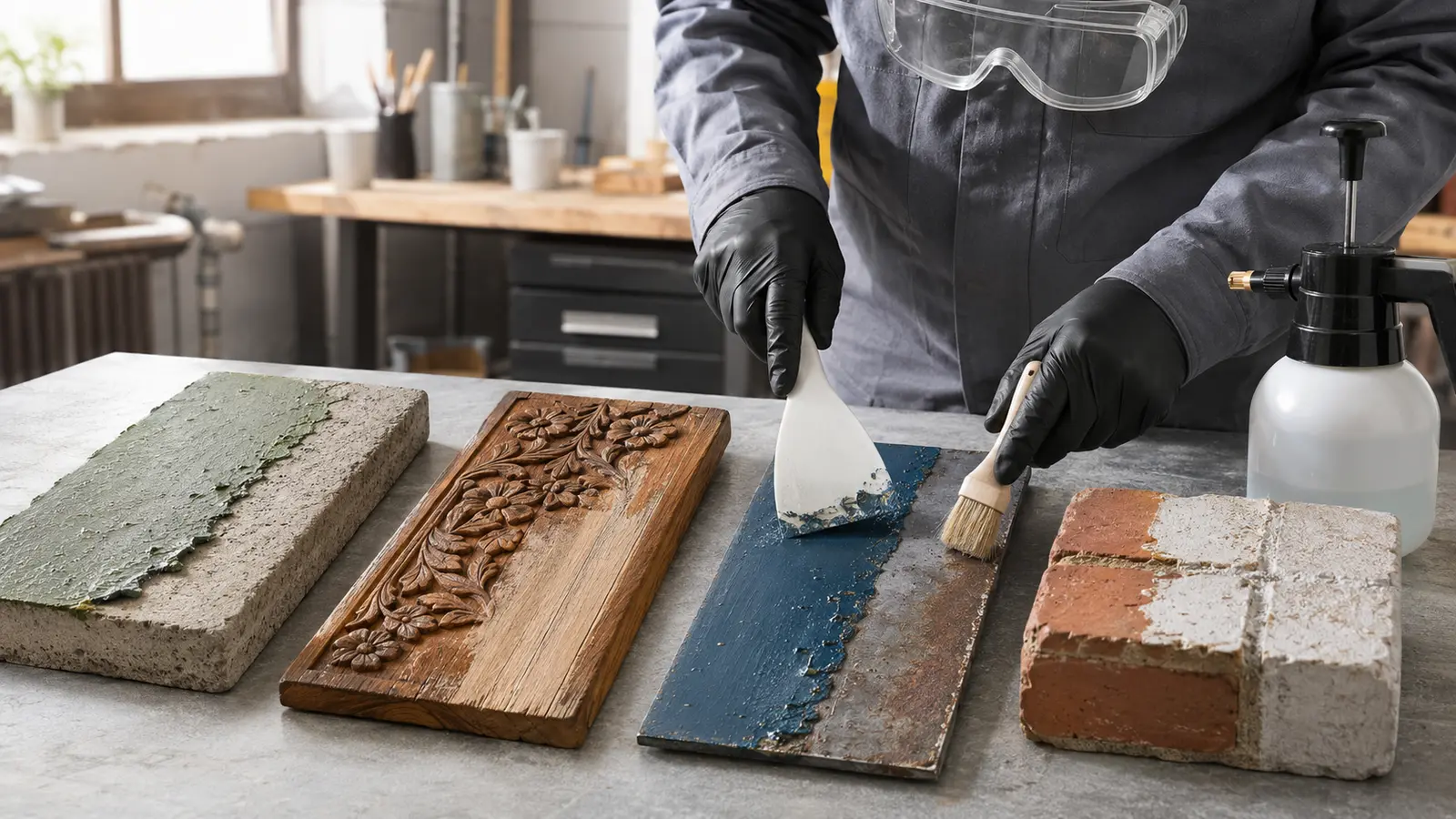
If your pavers have turned white, become cloudy, are peeling, or show patchy glossy areas, the existing sealer must be removed before resealing. This guide compares the best paver sealer strippers for 2025, explains how to use them, and helps you choose the right product based on sealer type and severity.
The best way to remove paver sealer is to use a professional sealer stripper designed for acrylic or urethane coatings. Apply generously, allow dwell time, scrub or pressure wash, and repeat as needed before resealing.
⭐ Top 5 Paver Sealer Strippers (2025)
| Rank | Product Type | Best For | Strength | Notes |
|---|---|---|---|---|
| 1 | TPSS Heavy-Duty Paver Sealer Stripper | Acrylic & urethane | ★★★★★ | Fastest & strongest |
| 2 | Gel-Based Stripper | Thick acrylic buildup | ★★★★☆ | Clings to vertical surfaces |
| 3 | Water-Based Stripper | Light whitening | ★★★☆☆ | Eco-friendly, slower |
| 4 | Solvent Reflow | Minor haze | ★★★☆☆ | Fixes light whitening instantly |
| 5 | Mechanical Removal (Pressure + heat) | Very heavy layers | ★★☆☆☆ | Last resort option |
🥇 #1 Best Overall: TPSS Heavy-Duty Paver Sealer Stripper
The strongest and most effective stripper for acrylic and urethane sealers.
Why It’s #1
- Removes white, cloudy, peeling, or failed sealer
- Works on thick acrylic buildup
- Fastest dwell time
- Safe for concrete, brick, travertine, and natural stone
- Ideal after DIY sealing mistakes
Best For
- Completely failed sealer
- Multiple old layers
- Moisture-whitened sealer
- Overapplication buildups
- Dark blotches or streaking
🧪 #2 Gel-Based Stripper (Best for Vertical Areas & Thick Buildup)
Benefits:
- Excellent cling
- Perfect for coping, steps, walls
- Removes thick, stubborn layers
Limitations:
- More expensive
- Slower than liquid strippers
🟢 #3 Water-Based Stripper (Eco-Friendly Option)
Benefits:
- Low odor
- Safe for plants and pets
- Good for mild whitening
Limitations:
- Not effective on urethane
- Slowest dwell time
- Multiple applications required
🔧 #4 Solvent Reflow (Fix Light Whitening Fast)
This is not a stripper, but a corrective solvent that reactivates the top layer of sealer.
Best For:
- Light whitening
- Minor haze
- Uneven gloss
Not for:
- Thick, failed, or multiple sealer layers
🡆 Learn whitening causes:
Fixing Cloudy or White Pavers After Sealing
🔥 #5 Mechanical Removal (Last Resort)
Includes:
- Hot pressure washing
- Turbo-tip cleaning
- Surface grinding
Used only when chemical strippers fail. Risk of:
- Surface scarring
- Joint sand removal
- Paver discoloration
🧼 How to Strip Paver Sealer (Step-by-Step)
1. Clean Surface Before Stripping
Remove dirt, algae, and loose debris.
🡆 Use guide: How to Clean Pavers Without a Pressure Washer
2. Apply Sealer Stripper Generously
Use roller, sprayer, or pour directly.
Coverage:
- 75–150 sq ft per gallon (depends on buildup)
3. Allow Proper Dwell Time
Most strippers need:
- 20–45 minutes
- Heavy buildup may require 60+ minutes
- Keep surface wet — reapply if drying
4. Agitate With a Stiff Brush
Breaks up sealer and lifts coatings from pores.
5. Rinse or Pressure Wash
Use medium pressure to flush out softened sealer.
6. Repeat If Needed
Multiple layers may require multiple applications.
7. Let Pavers Dry 24–48 Hours
Before resealing, pavers MUST be completely dry.
8. Reseal With High-Quality Urethane
Recommended:
Thin coats only — avoid future whitening.
🡆 Follow guide: How to Seal Pavers
🧭 How to Choose the Right Paver Stripper
Choose based on the problem:
| Issue | Best Stripper |
|---|---|
| Whitening or haziness | Solvent or TPSS stripper |
| Thick acrylic buildup | TPSS or gel-based |
| Peeling | TPSS heavy-duty |
| Old layers | Heavy-duty liquid stripper |
| DIY overapplication | TPSS stripper |
| Natural stone whitening | TPSS stripper (safe for stone) |
🚫 Sealer Stripping Mistakes to Avoid
❌ Letting stripper dry out
Must stay wet to work properly.
❌ Using too little product
Always apply generously.
❌ Trying to seal over failed sealer
Will worsen whitening or delamination.
❌ Sealing too soon after stripping
Moisture must evaporate fully.
❌ Using harsh acids
Ruins natural stone and damages concrete.
Read More:
Use these links throughout the article:
- How to fix cloudy paver sealer →
- Best paver sealers to use after stripping →
- How to seal pavers properly →
- How to clean pavers before stripping/sealing →
- Stain removal before resealing →
- Annual maintenance after resealing →
❓ Frequently Asked Questions (FAQs)
What is the best paver sealer stripper?
The best overall stripper is TPSS Heavy-Duty Paver Sealer Stripper, ideal for removing acrylic and urethane sealers, whitening, and old buildup.
Can I remove sealer without chemicals?
Mechanical removal is possible but risks damaging the paver surface.
How do I know if my pavers need stripping?
If they are white, cloudy, peeling, or blotchy, stripping is necessary.
Will pressure washing remove sealer?
It removes some, but not all. A stripper is still required.
How soon can I reseal after stripping?
Once pavers are fully dry — typically 24–48 hours.