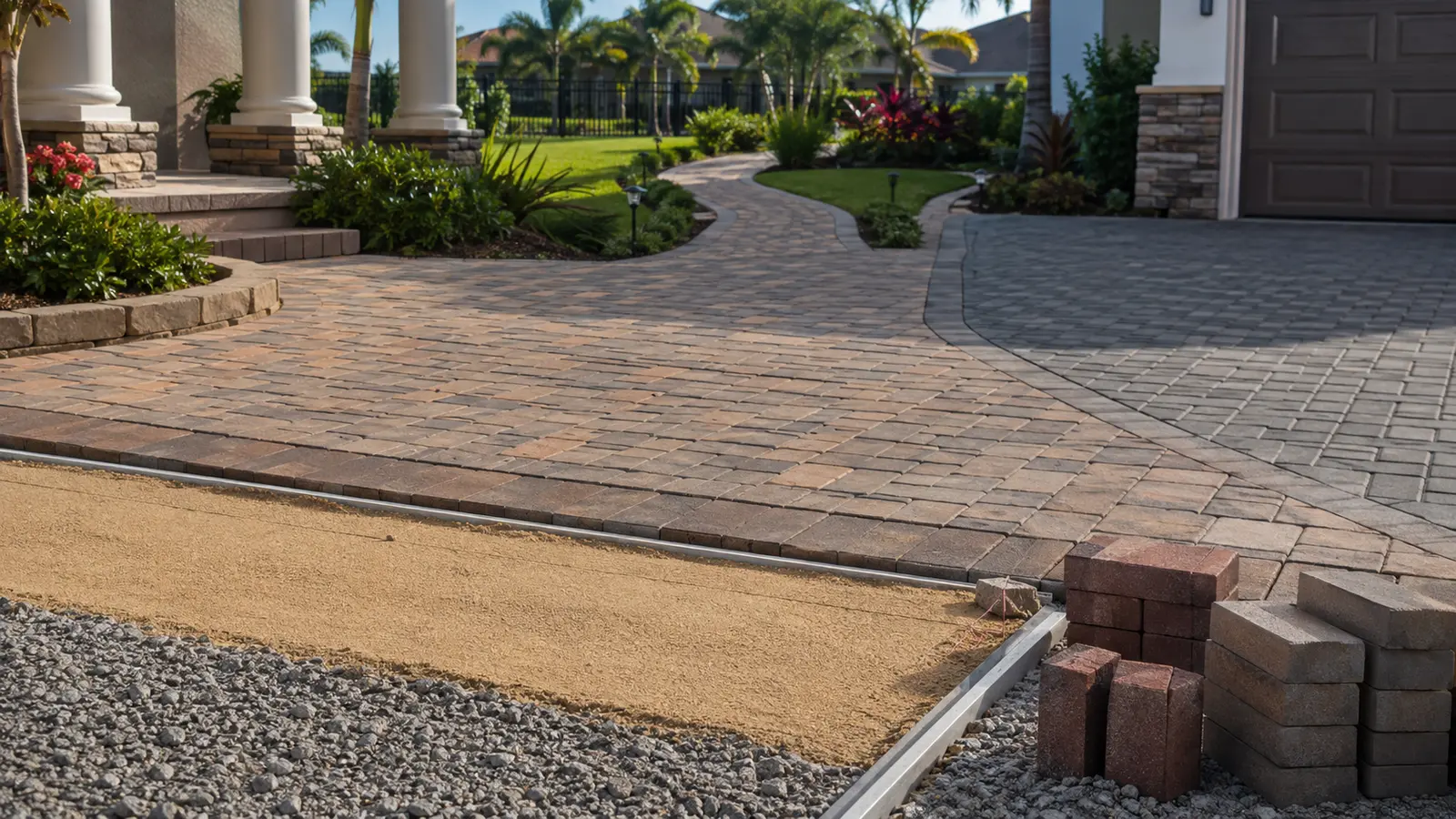
Commercial paver sealer should be specified as an operating system, not a cosmetic afterthought. Traffic type, loading, business hours, weather exposure, cleaning chemicals, old coating, slip risk, repair access, and allowable downtime all affect the correct product and installation sequence. The best commercial result is measurable, maintainable, and installed without creating avoidable disruption.
This guide is the commercial spoke of the Florida paver-sealer hub. For residential and material-specific applications, see the guides for driveways, patios, pool decks, and brick pavers.
Define the Commercial Service Conditions
- Traffic: Pedestrians, carts, passenger vehicles, delivery trucks, turning loads, and concentrated wheel paths create different wear.
- Contamination: Food grease, oil, gum, fertilizer, irrigation deposits, pool chemicals, and cleaning agents require different response plans.
- Downtime: Cleaning, sanding, coating, cure, striping, and reopening must fit the facility’s operating schedule.
- Safety: Surface texture, ramps, entrances, water, and maintenance practices must be considered before approving sheen.
- Maintenance: The owner needs a written cleaning and inspection plan that the facility team can actually follow.
Perform a Condition Survey
Document the paver type, square footage, borders, drains, repairs, settlement, rocking units, joint depth, stains, traffic lanes, shade, irrigation, and every visible coating condition. Photograph representative areas. Mark sections with peeling, whitening, tire pickup, ponding, or heavy wear. A uniform proposal cannot be built from a quick visual estimate if the site contains several different conditions.
Identify previous sealer wherever possible. Test adhesion and chemical resistance in both worn and protected areas. If an old film is weak or incompatible, the project scope must include corrective preparation rather than promising that a new coat will hide it.
Use a Field Sample as the Project Standard
Install a representative test area using the proposed cleaner, joint treatment, sealer, spread rate, application tools, and traction system. Place the sample where it includes typical surface texture and exposure, but where a correction is manageable. Allow it to cure fully. The owner should approve color, sheen, traction, and appearance in writing before production begins.
A sample does more than show gloss. It can expose old-coating incompatibility, darkened repairs, uneven absorption, trapped contamination, and unrealistic coverage assumptions.
Select the Commercial Sealer System
| Requirement | System characteristic | Verification |
|---|---|---|
| Natural appearance | Penetrating protection on compatible masonry | Absorption test and cured sample |
| Color enhancement | Wet-look film-forming system | Old-coating compatibility and moisture check |
| High sheen | High-gloss film with controlled application | Coverage, traction, and maintenance approval |
| Joint stabilization | Sealer able to penetrate properly installed sand | Joint depth, sand type, compaction, and spread rate |
| Shorter production workflow | System suited to crew size and job phasing | Label cure times and reopening plan |
Use the complete paver-sealer selection guide to compare chemistry and old-coating compatibility. For compatible pavers requiring color enhancement and joint stabilization, evaluate Ultra Seal Classic Gloss Wet Look Paver Sealer. Where higher gloss and a one-component workflow are priorities, compare UltraGloss SX. For compatible concrete where a natural dry appearance is specified, review Ultra Seal Eco Shield.
Build a Controlled Production Plan
- Divide the property into sections with independent access and natural stopping points.
- Coordinate signage, barricades, deliveries, tenants, irrigation, and security.
- Treat stains and failed coatings before general washing.
- Follow the pressure-washing preparation guide and control runoff.
- Restore joints using the joint-sand specification guide.
- Verify weather and moisture before each section is coated.
- Record batch numbers, mix times where applicable, coverage, crew, start and finish times, and site conditions.
- Keep each section closed until it reaches the label’s reopening condition.
Coverage and Quality Control
Measure square footage by section and reconcile material use against the specified spread rate. Extremely low consumption can indicate inadequate application; excessive consumption can indicate over-application, deep joints, high absorption, or poor control. Inspect edges, turns, entrances, drains, borders, and overlap areas while the coating can still be corrected.
For two-component materials, document component ratio, induction requirements, mix time, pot life, and disposal. Never extend working time with unauthorized additions. For one-component materials, keep containers clean and closed as directed to prevent contamination and skinning.
Commercial Maintenance Plan
Give the facility a written plan that identifies compatible cleaners, spill response, gum and grease procedures, prohibited chemicals, inspection frequency, and the person responsible for reporting defects. High-traffic lanes and entrances should be reviewed more often than decorative borders. Early localized maintenance is usually easier than waiting for widespread wear or coating failure.
Commercial Specification Checklist
- Survey and photograph the existing surface.
- Identify old coating and repair requirements.
- Define appearance, traction, traffic, and downtime.
- Approve a fully cured field sample.
- Specify cleaning, joint work, spread rate, and cure protection.
- Phase access and reopening by section.
- Record materials and conditions during production.
- Deliver a practical cleaning and inspection plan.
Commercial paver sealing succeeds when the coating specification and the operating plan support each other. Product selection alone cannot compensate for weak preparation, uncontrolled access, or an undefined maintenance program.